Why is my AC running but not cooling the house?
Common causes are a clogged filter, a dirty outdoor unit, a failed capacitor or low refrigerant. Check the filter and clear the condenser first. If air stays warm, a provider should test the system.
Request an estimate for AC repair
A dead or weak air conditioner is more than a comfort problem. In the Kenner area, hot, humid summers push every system hard, and attics bake the whole house. A small fault left alone can turn into a big repair. It can also cause moisture and mold problems that hurt your home's value.
Fingerscosts Heating & Air is a referral service. We do not do the work. We connect you with independent HVAC providers in our network who diagnose and fix cooling problems. This page shows what you can safely check yourself, what a repair visit looks like, and what to ask before you say yes. Check first, then call, and know where DIY ends.
Grab a flashlight and spend ten minutes on these checks. They cost nothing but a little effort, and they sometimes solve the problem.
Set it to cool and drop the target five degrees below the room temperature. Dead screen? Swap the batteries. Make sure it is not set to "fan only" or a hold schedule.
Find the breakers marked for the air handler and the outdoor unit. If one has tripped, flip it fully off, then on, one time. If it trips again, stop. That points to an electrical fault, not a nuisance.
Slide the old filter out and hold it to the light. If you cannot see through it, replace it. A clogged filter chokes airflow and can make the coil ice up.
Pull leaves, grass clippings and weeds away from the condenser. Leave about two feet of space on every side. Gently rinse the fins with a garden hose. Never use a pressure washer.
Some jobs belong to a licensed pro. Do not open the electrical panel on the unit. Do not handle refrigerant. Do not chip ice off the coil with a tool. If you see ice, switch the system to "off" and the fan to "on" so it can thaw.
If the checks did not help, Request a callback to check provider availability. Many providers can respond quickly when the heat is serious.
You do not need to wait for a full breakdown. Watch for these:
Catching these early is cheaper than waiting for a hot-weekend failure. It also keeps moisture out of your walls and ceilings.
The provider asks what you have noticed, then tests the system. Expect checks of airflow, voltage, the capacitor, refrigerant levels, the coil and the drain line.
Before any repair starts, ask for the problem, the fix and the price in writing. A good provider explains it in plain words and shows you the worn part when possible.
These small electrical parts help the motors start. When one fails, the outdoor fan may hum but not spin. It is a common repair and usually a modest one.
An AC does not "use up" refrigerant. If levels are low, there is a leak. Topping it off without finding the leak only buys you a few weeks.
Humid weather makes a lot of condensation. If the drain line backs up, water can stain ceilings or damage the floor under the air handler. A provider can clear and flush it.
A worn fan motor or a dirty coil cuts cooling fast. Fixing the cause matters more than thawing the ice again and again.
Most repairs make sense. Think about replacement when the system is past 12 to 15 years old, needs repeated fixes, or uses an older refrigerant that is getting harder to find. A rough rule: if one repair costs half the price of a new system, ask for both numbers side by side.
A new, right-sized system can also help resale. Buyers and inspectors notice an aging unit.
Older houses hide surprises. Ductwork may be patched, leaky or undersized. Attic and crawlspace runs can be tight and hot. Pier-and-beam homes may have ducts hanging close to damp ground, and older slab ranches often have ducts buried in the attic insulation.
Tell the provider about past repairs, additions and rooms that never cool well. That history helps them find the real cause, not just the symptom.
If an answer feels vague, ask again. You are inviting someone into your home.
A clean filter, a clear outdoor unit and a yearly tune-up keep small problems small. Some policies may cover sudden damage, so check your policy, and providers can often help document damage for a claim. A careful repair now protects the house and its value later.
Providers test airflow, electrical parts, refrigerant and the coil to find why your system is not cooling.
Capacitors, contactors, fan motors and other worn parts can be replaced on many systems.
Clogged condensate lines get cleared to protect ceilings, floors and the area around the air handler.
You get the problem, the fix and the price spelled out before any repair work begins.
Prices vary by home, system age and the part that failed. These are typical U.S. ranges, not quotes. Always ask the provider for a written quote before you approve any repair work.
| Repair item | Typical range | Notes |
|---|---|---|
| Diagnostic visit | $75 – $200 | Often applied toward the repair |
| Capacitor or contactor | $150 – $450 | Common and usually quick |
| Fan motor replacement | $400 – $900 | Depends on the unit type |
| Drain line clearing | $100 – $350 | More if the pan is damaged |
| Refrigerant leak repair | $250 – $1,600 | Varies with leak location |
| Compressor replacement | $1,200 – $2,800 | Compare against full replacement |
Check the thermostat, breaker, filter and outdoor unit. Skip anything involving electrical panels or refrigerant.
Request a callback to check availability, or send the request form with a few details.
A local provider reviews your system, finds the cause and explains the fix.
Review the written quote, ask questions, then approve the repair when ready.
We connect you with independent providers in our network who work in your area and know the local climate.
You get safe checks first, so you know what to try and when to stop.
A careful repair keeps your system and your home in good shape for resale.
Request an estimate and decide on your own. There is no pressure to hire anyone.
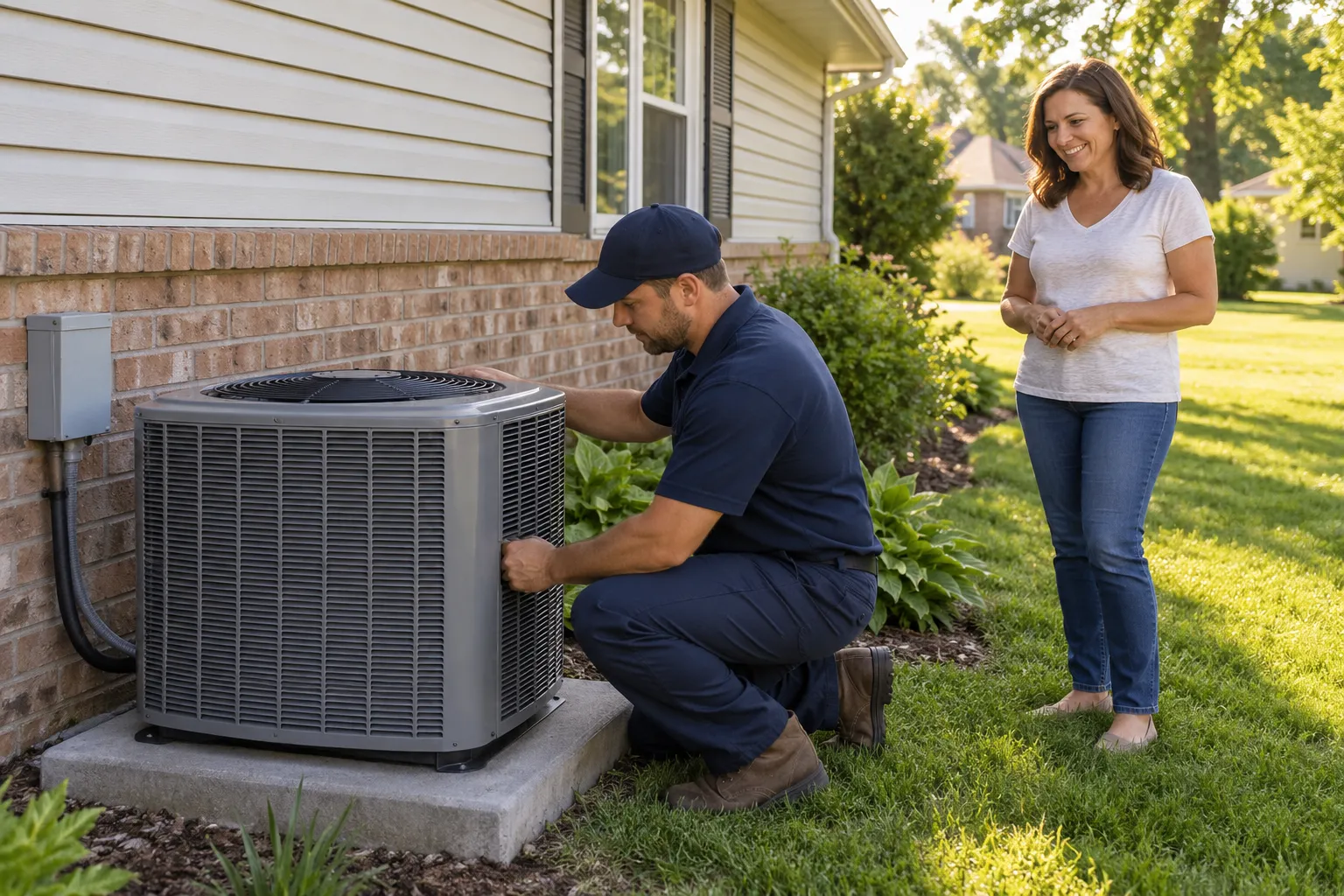
Tell us what your system is doing. Request an estimate, or Request a callback to check provider availability in the Kenner area. No obligation to move forward.
No obligationCommon causes are a clogged filter, a dirty outdoor unit, a failed capacitor or low refrigerant. Check the filter and clear the condenser first. If air stays warm, a provider should test the system.
No. Handling refrigerant takes training and special tools, and low levels mean a leak. A provider should find and fix the leak so the problem does not return.
Look at age, repair history and the quote. A system under about 12 years old with one fixable fault is often worth repairing. Ask for repair and replacement prices side by side.
Tell us what your system is doing. Request an estimate, or Request a callback to check provider availability in the Kenner area. No obligation to move forward.
No obligation